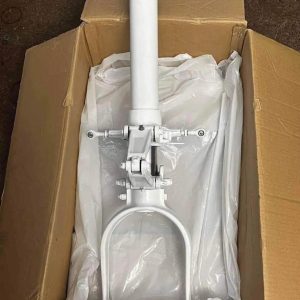
The Cessna Nose Gear Strut Assembly provides structural support, shock-management capability, and ground-handling stability for an appropriately verified Cessna aircraft installation.
The Cessna Nose Strut may provide shock absorption and structural support, but actual functions depend on the complete assembly and aircraft configuration.
Clear descriptions help buyers determine whether the listing includes a complete assembly, partial strut, housing, piston, fork, or related hardware.
The Cessna Landing Gear Assembly functions as a coordinated system, while the Aircraft Landing Gear Strut should not be evaluated separately from its mounts, steering, wheel, tire, and surrounding structure.
A Cessna Replacement Nose Gear should correspond with the receiving aircraft’s approved configuration rather than being selected through appearance alone.
Identifying the Complete Nose Gear Component
Complete identification gives technicians the information needed to evaluate suitability.
Informal descriptions such as complete or ready to install should be supported by an exact inventory.
How the Nose Gear Supports the Airframe
The strut must manage those loads without excessive looseness, binding, deformation, leakage, or structural distress.
Any evidence of previous impact should be disclosed and investigated.
Managing Landing and Taxi Impacts
The exact method may involve hydraulic fluid, compressed gas, seals, metering features, mechanical components, or a combination determined by the aircraft design.
Incorrect pressure or fluid quantity can influence ground clearance, steering, ride quality, and structural loading.
Inspecting Steering Links and Torque Components
Loose steering components can contribute to poor directional response, uneven tire wear, shimmy, and unpredictable ground handling.
Towing procedures should respect the aircraft’s steering limitations.
Matching the Strut to a Specific Cessna Aircraft
Two aircraft with similar outward appearance may use different struts, forks, cylinders, steering features, hardware, or mounting arrangements.
The complete receiving-aircraft configuration should be reviewed before purchase.
Checking Chrome and Machined Surfaces
Sliding and sealing surfaces must remain within acceptable condition because defects can damage seals and contribute to leakage or sticking.
Qualified inspection protects the long-term value of the Cessna Landing Gear Strut.
Seal Condition and Fluid Leakage
The strut should be inspected after cleaning and appropriate servicing to determine whether leakage returns.
Any internal maintenance should be documented with parts and procedures used.
Maintaining Protective Finishes
Surface discoloration should be evaluated rather than dismissed automatically as cosmetic.
The component should be stored in Cessna Front Landing Gear Assembly a dry, controlled environment before installation.
Inspecting High-Stress Areas
High-stress areas can include attachment points, fork transitions, axle regions, steering features, torque-link mounts, and previous repair locations.
Transparent impact history supports informed Cessna Front Landing Gear Assembly purchasing.
Maintaining Wheel and Tire Geometry
The axle should remain dimensionally suitable, smooth, correctly secured, and free from severe wear or thread damage.
Wheel bearings, seals, spacers, and retaining hardware should be evaluated separately rather than assumed serviceable because they are attached to the assembly.
Evaluating Wear and Side Play
Excessive play can contribute to wheel misalignment, vibration, shimmy, and accelerated component wear.
Recurring shimmy should prompt inspection of the entire nose gear, wheel, tire, steering, balance, and attachment system.
Understanding Ground Vibration Causes
Operational reports should identify when the vibration occurs and under what taxi or landing conditions.
Tire condition should be reviewed together with the strut, wheel, fork, axle, and steering components.
Servicing the Cessna Shock Strut
Incorrect fluid, contamination, trapped air, overpressure, or underpressure can affect extension, damping, leakage, ground clearance, and structural loading.
Repeated pressure loss should prompt leak investigation rather than continual inflation.
Evaluating Internal and External Components
The exact scope should be defined in the work records rather than assumed from the word overhauled.
Unauthorized welding, straightening, plating, machining, or hole enlargement can affect future eligibility.
Cessna Front Gear Condition Review
A pre-purchase review should confirm the exact part number, configuration, aircraft applicability, serial markings, dimensions, included components, removal reason, condition, repair history, and documentation.
- Resolve identity, applicability, condition, and package-completeness questions before payment.
- Do not treat clean paint, smooth movement, or a removed-serviceable statement as proof of current installation eligibility.
- Require packaging that supports the strut and protects the piston surface, cylinder, fork, axle, steering components, fittings, identification markings, records, and loose hardware from impact, corrosion, and movement.
Safe Freight Handling Procedures
Loose hardware should be labeled, wrapped, and secured separately.
Forks and mounting features should not be used as uncontrolled lifting points unless approved for handling.
Preventing Corrosion and Seal Damage
Responsible storage preserves the future usefulness of the Cessna Nose Strut.
Preservation materials should be removed through appropriate procedures.
Preparing for Ground-Handling Checks
Surrounding structure should be inspected for cracks, corrosion, deformation, worn holes, and previous repair before installing the replacement assembly.
Disciplined workmanship supports reliable Cessna Front Landing Gear Assembly operation.
Any abnormal indication should receive prompt evaluation before further operation.
Routine Inspection and Preventive Maintenance
Lubrication and servicing should follow the applicable maintenance schedule.
The nose gear should receive additional inspection after a hard landing, runway excursion, towing incident, tire failure, severe shimmy, obstacle strike, or abnormal ground handling event.
Evaluating Used Aircraft Gear Pricing
The commercial value of a Cessna Nose Gear Strut Assembly depends on exact identification, aircraft applicability, completeness, physical condition, corrosion status, leakage, repair history, overhaul records, included hardware, and documentation.
The lowest-priced assembly may not offer the lowest installed cost when major repairs or missing parts are discovered.
Choosing the Cessna Nose Gear Strut Assembly
When thoroughly evaluated and correctly installed, the Cessna Nose Gear Strut Assembly can become a valuable component within the aircraft’s complete landing-gear system.
Buyers should request current photographs, accurate measurements, transparent condition information, professional inspection details, protected freight arrangements, secure transaction terms, and qualified maintenance review.
Whether the requirement is a Cessna Nose Landing Gear Strut, Cessna Nose Gear Assembly, Cessna Landing Gear Strut, or Cessna Nose Strut, exact identification should guide the purchase.
With prompt attention to leakage, scoring, corrosion, shimmy, tire wear, loose bushings, steering play, impact events, and abnormal compression, the installation can preserve its operating potential.